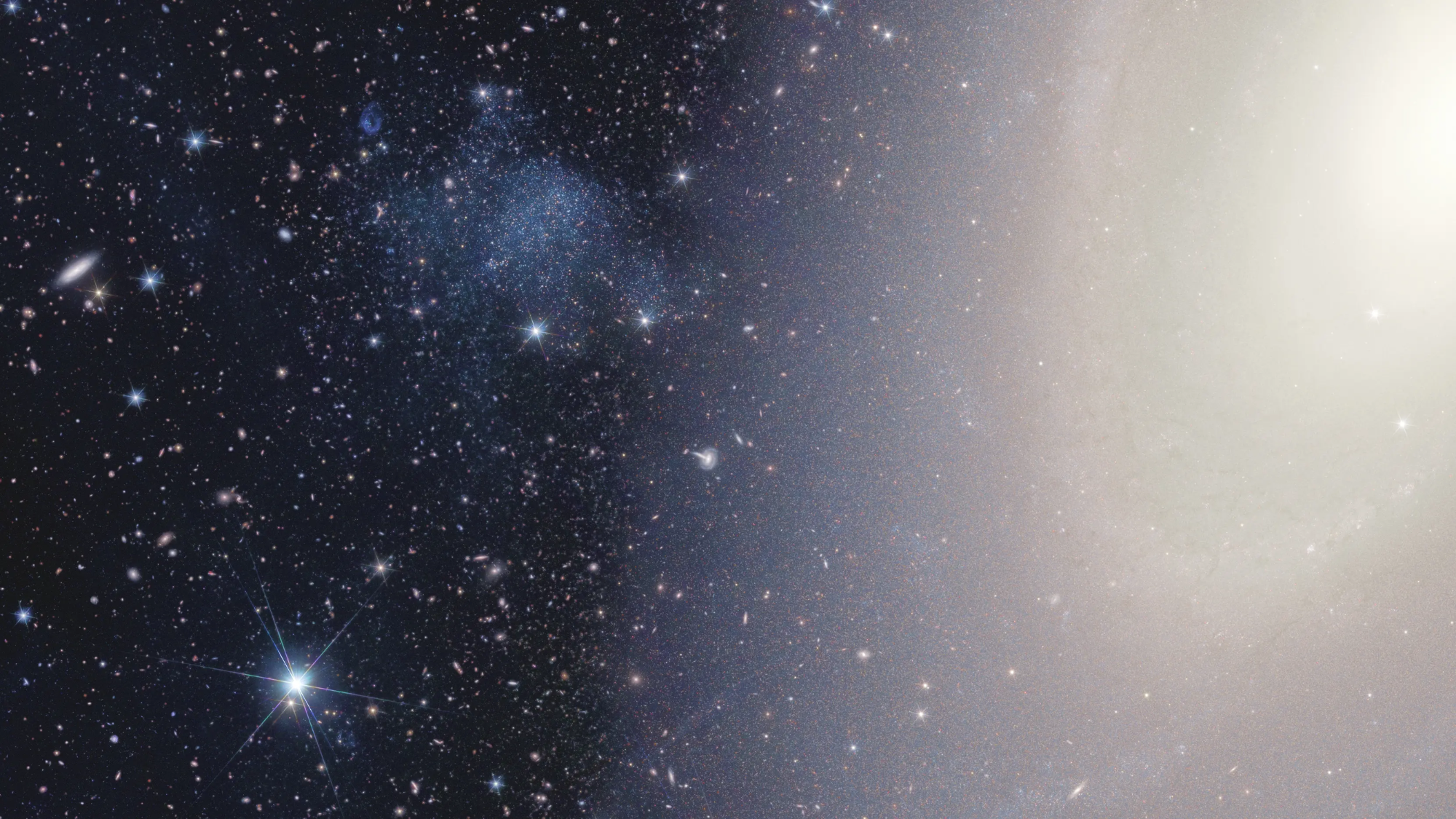
Around 95 percent of the universe is made of stuff we can't see, and Euclid is built to chase it. The European Space Agency's telescope has now released its first major batch of data, DR1-Foundation, as Space.com reports.
The release draws on 13 months of observations covering a patch of sky as big as 9,500 full moons. It holds light from more than a billion objects, including over 900 million galaxies.
The numbers
- Light spectra from 160 million sources
- 60 million quasar candidates
- 15,000 strong gravitational lens candidates
- Just 14% of the planned six-year survey
Gravitational lenses, where a massive object bends light from something behind it, are especially valuable because they help map where unseen matter sits. That's the raw material for studying dark matter and dark energy.
Why it belongs on your radar: datasets this large are only workable with machine learning and serious computing, which is why astronomy increasingly looks like data science. It's a reminder that curiosity-driven science creates real demand for data and AI skills, and a lot of the data is open to explore.