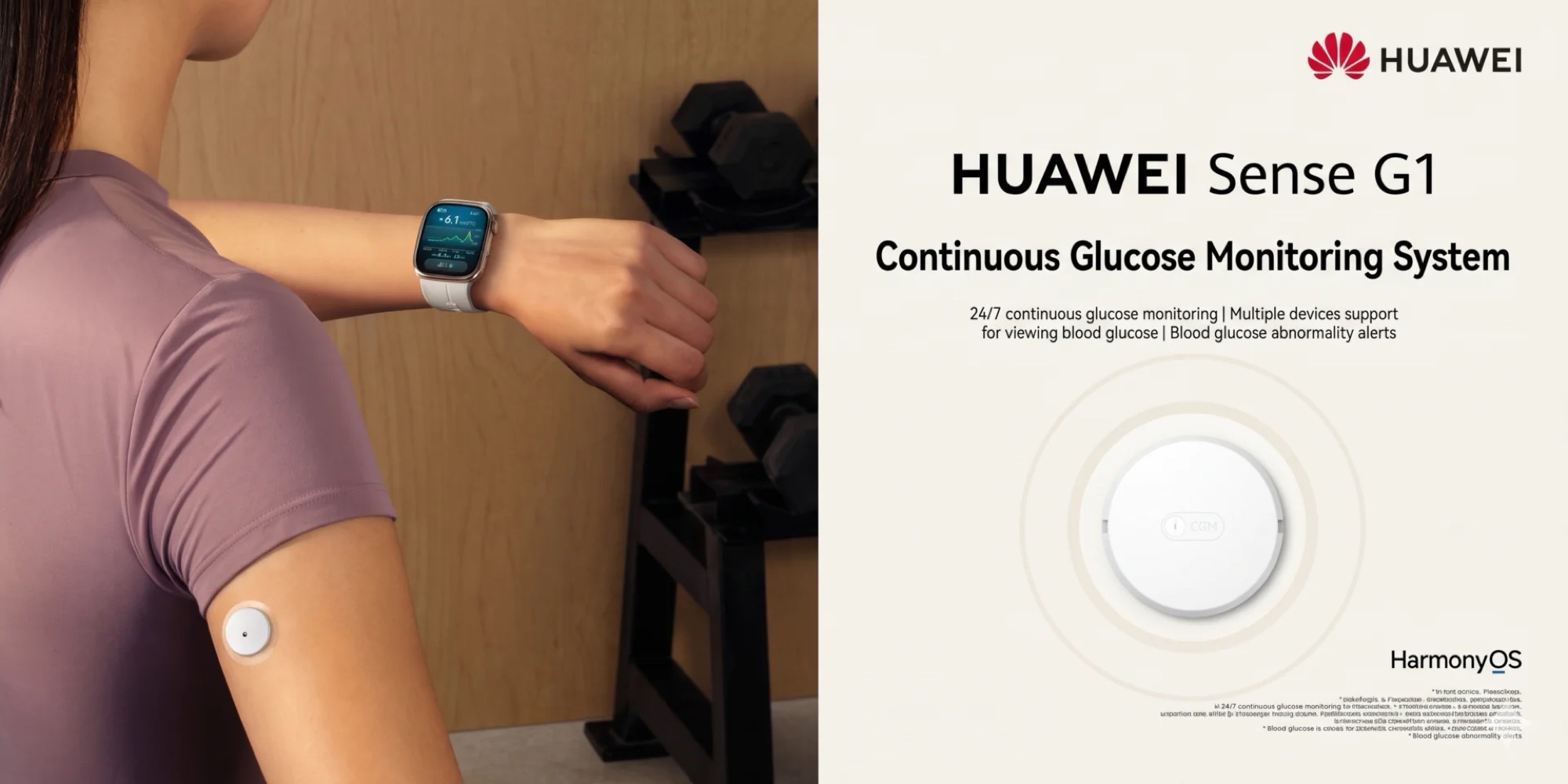
Huawei just crossed from fitness gadgets into real medical hardware. The Sense G1 is the company's first continuous glucose monitor (CGM): a small, round sensor worn on the arm that tracks glucose day and night and sends alerts to your phone or smartwatch when readings drift out of range.
What it actually does
A tiny needle under the skin reads the fluid around your cells, and electrodes convert that into a blood sugar number, so there is no finger prick for each reading. According to Gizmochina, the sensor is meant for a single user, needs no calibration and lasts up to 16 days.
China's National Medical Products Administration approved it as a Class III device, the country's highest risk category, which also covers items like cardiac stents. It is the first Class III device from Huawei's consumer hardware business, and Huawei's Terminal BG CTO Li Xiaolong says it was the company's longest development project, with roughly 35 months since he first wore a test version in December 2023.
The caveats
Accuracy claims come from a report, not from Huawei: a MARD below 10%, and readings that can lag actual blood sugar by 5 to 15 minutes. Treat both as unconfirmed until independent testing lands. Huawei has not said what it will cost or when it goes on sale, though an event later this month may bring details.
Why it matters to you
Glucose data is moving from a diabetes-only tool toward a wellness metric for everyone, and big consumer brands are racing in. For readers, the takeaway is practical: a watch that can only estimate diabetes risk is very different from a sensor that measures glucose directly. If you are shopping for health wearables, check whether a device is a regulated medical product or a lifestyle gadget before you trust it with health decisions.